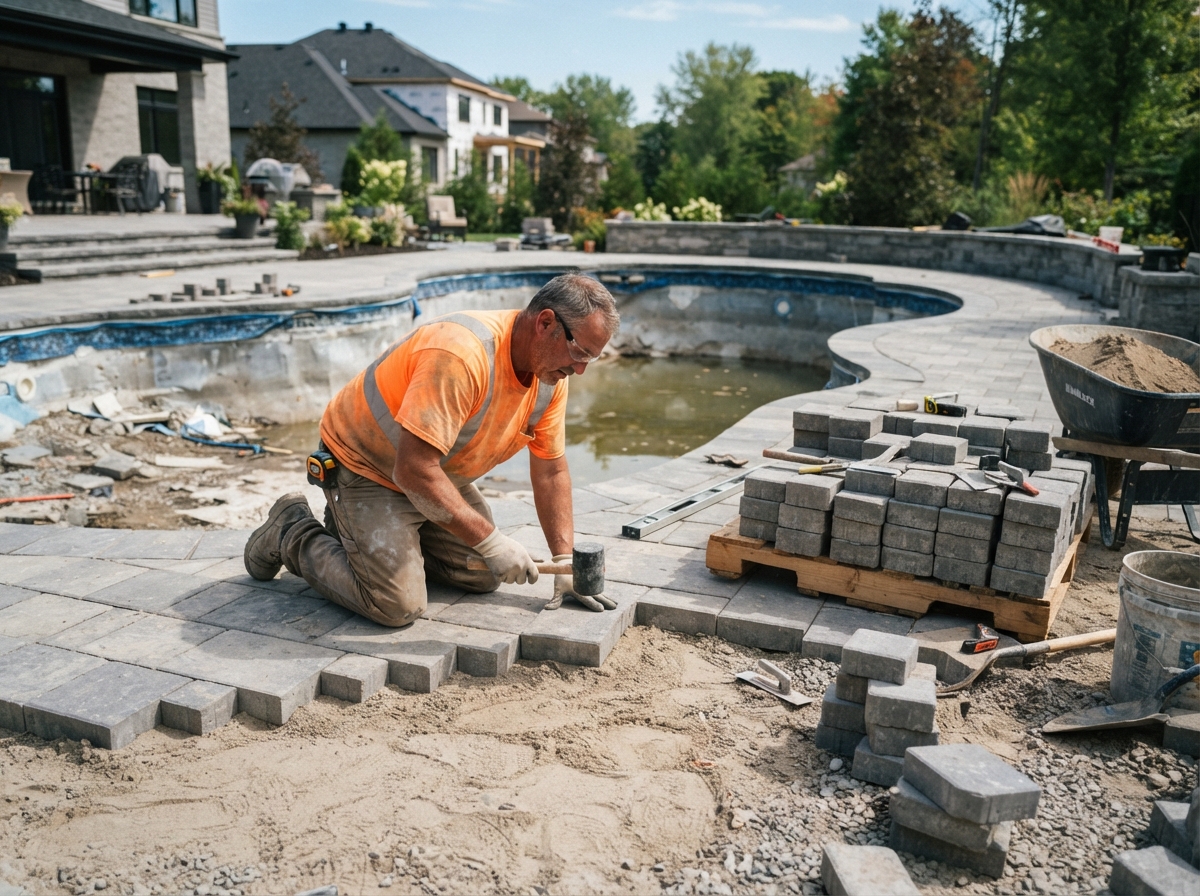
Pool plaster is a thin cementitious coating over the gunite shell, and it's built to last roughly 10 to 15 years before it starts showing its age through roughness, staining, or small chips and pits where the surface has worn through. Resurfacing means draining the pool, stripping the old finish down to sound substrate, and applying a new coat, whether that's traditional white plaster, a pebble-aggregate finish, or a quartz-blended surface with more color and texture options.
You likely need resurfacing if the pool surface feels rough or sandpaper-like underfoot, if you're seeing dark staining that won't lift with acid washing or brushing, if plaster is visibly chipping or exposing the gray gunite underneath, or if algae seems to take hold faster than it used to despite normal chemical maintenance, since a degraded surface gives algae more places to grip. None of these are urgent safety issues on their own, but a badly worn surface eventually starts leaking at hairline cracks, which is a much bigger repair than a planned resurfacing.
Our resurfacing process starts by draining the pool and acid-etching or bead-blasting the old plaster to give the new coat something to bond to. We patch any structural cracks in the gunite shell before applying the new surface, then trowel and finish the new plaster, pebble, or quartz coat and begin a careful fill and startup chemistry process, since new plaster needs specific water chemistry in its first few weeks to cure properly and avoid staining right out of the gate. Most resurfacing projects take 1 to 2 weeks from drain to refill, with an additional week or two of careful chemistry monitoring before the pool is back to normal use.
Benefits of Pool Resurfacing
- Restores a smooth, comfortable swimming surface
- Removes staining and pitting that chemicals alone can't fix
- Choice of traditional plaster, pebble, or quartz finishes
- Addresses small structural cracks before they become leaks
Common Questions
If an acid wash and thorough brushing don't restore a smooth feel and even color, the surface itself has worn through and needs resurfacing rather than cleaning. We can assess this for free and tell you honestly which one you need.
We install pebble-aggregate finishes and quartz-blended plaster in addition to traditional white or colored plaster. Pebble and quartz finishes generally last longer and offer more color depth, at a higher material cost than standard plaster.